
The Forgotten Village and the Lost Soul
- Kateb-Nuri-Alim

- Sep 3, 2025
- 5 min read

The Forgotten Village and the Lost Soul
The Body Without the Village Is Just Bones
By Kateb Shunnar
It’s strange, isn’t it, how easy it’s become for us to excuse ourselves, to wrap our mistakes in shiny paper and call it “my truth.” We take wrong, give it a pep talk, and parade it around like it’s wisdom. And the funny part though it’s the kind of funny that makes you shake your head is how we gather people around us who clap for our foolishness, like we’re running a halftime show of self-destruction. “Do you!” they shout. “Live your best life!” But when you look closely, that “best life” often resembles a slow march into quicksand with glitter sprinkled on top. We’ve managed to confuse freedom with recklessness, and wisdom with stubbornness, and the sad part is we call it progress.

I remember when correction had a seat at the table. When Grandmama’s voice carried more weight than a hundred social media likes. When Father’s eyes alone could settle you down before you even thought about running wild. When the neighborhood elder would wave you over, sit you on a rickety porch, and tell you straight: “Baby, you’re wrong.” Nobody sugarcoated it. Nobody clapped for your rebellion. And the beauty of it was you grew from it. Now it feels like all those voices got drowned out by the roar of “Nobody can tell me nothing.” That’s the anthem these days. Rebellion got a marketing team, pride got its own billboards, and humility packed up and moved out.
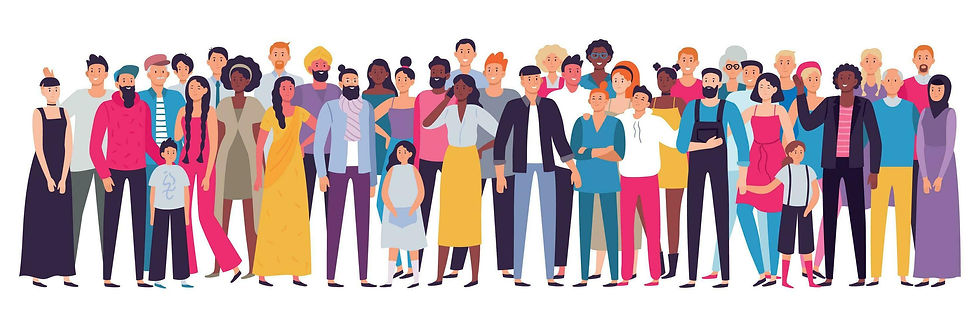
We used to have a village. And I don’t mean just houses clustered together. I mean a living, breathing rhythm of people who understood that your joy was my joy, your struggle was my struggle, and your survival was tied to mine. In that village, you didn’t need apps to feel connected you needed a knock on the door, a pot of soup when you were sick, a prayer whispered on your behalf. Peace lived in that place. Belonging lived there. And faith wasn’t something you carried alone; it was woven into the fabric of daily life.

But now it’s all about “my, my, my.” Johnny Gill sang it once, but we’ve turned it into our creed. We chant it like a chorus: my time, my money, my truth, my space. We forgot that the human body isn’t one giant eye or one enormous hand it’s a collection of parts that only make sense together. When we cut ourselves off from one another, when we crown individualism as king, the body of humanity becomes a skeleton. The body without the village is just bones dry, disconnected, rattling with no heartbeat.
We even have the nerve to put price tags on what should be sacred. We sell water, knowing it’s life itself. We charge people to survive, to be healed, to learn. Education, health, compassion all treated like items in a store aisle. Picture this: a man gasping for breath, clutching his chest, and someone standing over him with a cash register. That’s the madness we’ve normalized. And we smile while doing it, as if progress means making people pay for what God already gave freely.
What is “human” anymore? I’ve thought about this, and the answer came to me almost like an acronym carved into my spirit: Hoarding, Unchecked greed, Material obsession, Apathy, Neglect. That’s what too many of us have become. And we wonder why the world feels empty.
Let me pause here, because I want to share a story. Not one I read in a dusty book, but one that came to me like smoke rising from a fire I didn’t light. A village once lived by a mighty river, a river that fed their crops, quenched their thirst, and bound them together. They knew the river was their life. But one day, a stranger came with bright clothes and jars of gold. He told them, “This river belongs to me now. If you want its water, you must pay.” At first, they laughed. Who could own water? Who could own life? But little by little, doubt crept in. Maybe he’s right, they thought. Look at his wealth, his confidence. And slowly, they gave in. Mothers paid for cups of water for their children. Fathers bartered their tools for buckets. The stranger grew rich, and the people grew thirsty.

There was one old woman, gray and stooped but unshaken, who stood in the village square and cried out, “Fools! The river does not belong to him it belongs to us all! We are the river, and the river is us!” But they mocked her. They said she was old-fashioned, stuck in the past, resistant to progress. Years later, when drought struck, the stranger vanished, and the people, no longer a village but fragments of suspicion and greed, turned against each other for the last drops. The river didn’t dry because the heavens withheld rain. It dried because the people sold their soul for a lie.
And isn’t that us? We’ve forgotten that we are the river. That our survival is tied together. That no amount of gold can replace unity.
The body without the village is just bones. And bones clatter, but they don’t sing. Bones rattle, but they don’t dance. Bones lie in the dust, waiting for the breath of the Creator to knit them back into life. But here’s the hope: even dry bones can rise. Even scattered people can become a body again if they remember who they are.

I think often about the Creator’s design. He didn’t shape us to be lone wolves. He shaped us to be a flock. He didn’t carve us to be solo candles. He set us in a constellation, each star connected, forming a story across the sky. Yet somehow we decided we’d rather shine alone, even if it meant burning out quicker. We forgot that belonging is not a weakness it’s the way we were made.
And let me be a little sarcastic here, because sometimes you have to laugh to keep from crying. Imagine a man drowning, waving off the lifeguard because he read an article about “sovereign swimming.” Or a child declaring she’s living her “best life” by eating nothing but candy, then crying when her stomach twists. That’s us, ignoring wisdom, rejecting community, shouting “I got this” while our house is on fire. We’ve turned self-sabotage into a sport.

Yet, despite the comedy of our confusion, there’s a deeper truth humming beneath the noise. Community isn’t just about potlucks or playdates it’s spiritual survival. It’s prayer flowing like a current when your own voice cracks. It’s hands reaching out when your knees buckle. It’s the reminder that your song is part of a larger symphony, and even when your note falters, the music carries on.
And yes, community is messy. It’s Auntie pointing out your socks don’t match. It’s Grandpa telling the same story until you realize he wasn’t repeating himself he was planting something in you. It’s kids running wild while adults argue over potato salad recipes. But all that chaos, all that flavor, is the sound of belonging.

We’ve been tricked into thinking independence is the pinnacle of freedom, but the real freedom is knowing your soul isn’t for sale and your life is part of something eternal. Real freedom is understanding that being corrected doesn’t make you weak it makes you wise. Real freedom is building the village back, not with bricks, but with truth, humility, compassion, and the courage to say, “Baby, you’re wrong,” even when it’s uncomfortable.
Because when the village thrives, the body thrives. And when the body thrives, the soul breathes. Without the village, we are just bones scattered in the dust. But with the village, with the Creator breathing life into us, we rise. We rise as one body, one people, one river flowing again. And that, my friend, is the real best life.


Comments