
SERENDIPITY MAKENA.

SERENDIPITY MAKENA.
What the Mud Couldn’t Bury.
A Reflection on Adversity, Falling, Rising, and Refusing to Turn Dark.
By Kāteb Shunnar.

Now before I start this reflection, I already know what some of y’all gon’ say. “Kāteb… Serendipity? Really? Wow! Where in da world you got dat name from, and where you goin’ wit a reflection dat happened way back in 1865?” I know somebody else sittin’ dere sayin’, “Kāteb, bruh, it’s 2026. Why in da heck you takin’ us all da way back to 1865?” See, dat’s y’all problem right dere. Y’all don’t trust me. Every time I take da long road to make a point, somebody wanna pull out a spiritual GPS and start hollerin’, “Recalculatin’!” Just ride wit me a lil’ while. I promise I know where I’m goin’. Well… most of da time. And fo’ da record, I was not alive in 1865. I’m old enough fo’ my knees to occasionally predict rain, but I ain’t dat old. Let us establish dat right now ’fore somebody start diggin’ through an 1860 census tryin’ to find Kāteb Shunnar listed between somebody’s mule and great-great-grandpappy.
I went backward because sometimes da best way to understand where we are is to imagine somebody standin’ where da road behind us was barely a road at all. Sometimes you gotta leave dese smartphones, air conditioners, automobiles, microwaves, social-media arguments, and folks announcin’ every sandwich dey ate, and walk backward into a time when survival didn’t have no inspirational quote attached to it. Ain’t nobody wake up in 1865, sip some coffee, look into da sunrise and say, “Today I choose greatness.” Naw, suh. Some folks woke up wonderin’ whether dere would be enough food fo’ supper. Survival had mud on its feet, scars on its back, uncertainty sittin’ heavy in its stomach, and tomorrow wasn’t guaranteed to look no betta than yesterday.

So come on and walk wit me to New Orleans in 1865. Da Civil War was endin’, slavery was collapsing as a legal institution, and formerly enslaved people across Louisiana were steppin’ into a freedom dat was real but frighteningly incomplete. Being declared free did not mean somebody came knockin’ on yo’ door wit land, money, livestock, food, protection, education, medicine, tools, and a handwritten apology sayin’, “Our mistake.” Naw, baby. Freedom could finally tell you dat yo’ feet belonged to you, but freedom couldn’t promise dere was gon’ be a safe road underneath ’em.
Dat’s where we meet da Makena family. Serendipity Makena was thirty-four years old, da oldest of seven children, and her family had only recently come out of slavery. For most of Serendipity’s life, she had awakened knowin’ somebody else could determine where she worked, what she did, what happened to her family, and whether tomorrow might separate ’em. Her parents, Isaiah and Amara Makena, had carried dat reality even longer. Freedom didn’t erase dem years simply because laws were changin’. See, you can take a chain off somebody’s body long ’fore da mind stops hearin’ it rattle. Sometimes da body walks into freedom while da mind is still standin’ at yesterday’s door scared somebody gon’ call it back.
Dat matters because Isaiah and Amara were strong-willed people, but dey were carryin’ psychological wounds nobody around ’em had proper names for. Dey had lived under constant threat, uncertainty, exhaustion, humiliation, separation, and fear fo’ dere children. Isaiah could wake up one mornin’ ’fore daylight and work until his hands gave out, den on another mornin’ sit beneath a pecan tree starin’ off yonder like yesterday had found his address. Amara could be laughin’ wit her daughters while preparin’ food and suddenly freeze when a horse came approachin’ too fast or an unfamiliar man’s voice carried across da property. Sometimes Serendipity would look into her mama’s eyes and know her body was on dat farm, but some frightened piece of her mind had done traveled backward.
Back den, nobody was sittin’ Isaiah down sayin’, “Sir, what you are experiencing may be trauma.” Naw. Folks had different words. Dey might say somebody was melancholy, troubled, nervous, touched in da head, carryin’ sorrow, or had simply “seen too much.”

And lemme tell you, dat last one mighta been closer to da truth than anything else. Shoot, here we are in 2026 wit all dese fancy words, books, doctors, websites, podcasts, and people callin’ themselves life coaches after watchin’ three videos, and we still don’t always know how to sit wit somebody else’s pain. Somebody can tell us dere whole world fallin’ apart and here we come wit, “Just stay positive.” Thank you, Doctor Facebook. Dat oughta clear up generations of suffering by lunchtime.
Serendipity understood something other folks didn’t always understand. Her parents weren’t weak; dey were wounded, and dere is a difference. She loved ’em without pretending dere wounds didn’t affect da family, because love ain’t always pretendin’ everything is a’ight. Sometimes love is understandin’ why somebody limps while still helping ’em learn how to walk forward. And because Serendipity was da oldest, responsibility had found her early, moved itself into her life, put its feet up, and apparently had no intention of leavin’. Her brothers were Elijah, Josiah, and Amos, and her sisters were Ruthie, Celeste, and little Adeline. Some mornings Serendipity became daughter, sister, farmer, cook, protector, negotiator, nurse, carpenter, and family counselor ’fore breakfast.
And den dere was Moses, da family mule. Now Moses had apparently received freedom right along wit everybody else because dat animal did absolutely nothin’ he didn’t personally approve of. One mornin’ Serendipity pulled his rope and said, “Moses, git yo’self movin’. We got rows waitin’ on us.” Moses turned his head, looked at her, and didn’t move one muscle. Amos leaned against da fence laughin’ and said, “Maybe ol’ Moses ain’t called to de Promised Land dis mornin’.” Serendipity slowly turned toward her brother and said, “Boy, keep on laughin’. I reckon you gon’ be pullin’ dis plow whilst Moses rest hisself.” Amos’s smile disappeared quick. “Now, Sista, I ain’t said all dat.” Serendipity looked him dead in da eye and said, “You said enough.” Wouldn’t you know dat mule started walkin’. Serendipity shook her head. “Uh-huh. Dat’s what I thought. Even de mule know when somebody comin’ fo’ his employment. Triflin’ rascal been understandin’ English dis whole time.”
Dat was Serendipity. Life could exhaust her, frighten her, disappoint her, and occasionally knock her flat into Louisiana mud, but she refused to let life take every good thing livin’ inside her. She had learned something dat would become central to who she was: laughter does not always mean somebody’s life is easy. Sometimes laughter is how you stand at da doorway of yo’ spirit and tell misery, “Naw, suh. You already got one room up in here. You ain’t rentin’ de whole house. And don’t get too comfortable neither, ’cause I’m fixin’ to evict yo’ behind from dat room too.”
Her name tells us something about her. Serendipity is da unexpected discovery of something valuable or beautiful while searchin’ fo’ something else. Makena, meaning “the happy one,” gives us da other half of her character. But don’t confuse happiness wit smilin’ all day like ain’t nothin’ hurtin’. Serendipity’s happiness was stubborn. Dat joy had scars. Dat joy had calluses on its hands and mud underneath its fingernails. Hers was da kinda joy dat could carry water, plant seed, swing a hammer, comfort a frightened mama, argue wit a mule, cry behind da barn where nobody could see her, wipe her face, straighten herself up, and come back sayin’, “A’ight den, what we gotta do next?”
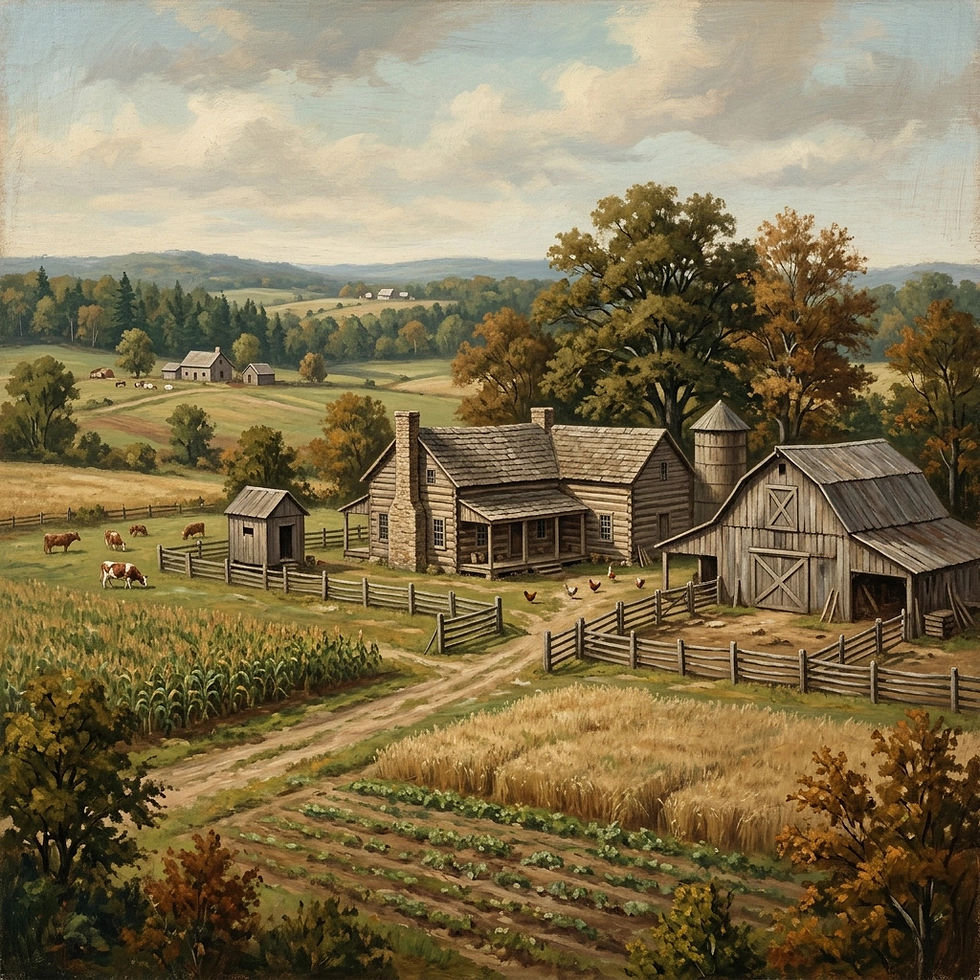
Da Makena family’s newly acquired farm meant mo’ than crops and livestock. Dis was land dey could finally work fo’ themselves. After livin’ under a system where da labor of dere bodies had belonged to somebody else, putting seed into dere own ground carried a meaning difficult fo’ us to fully understand today. Every fence post said ours. Every row dey planted said ours. Every chicken scratchin’ through da yard, every board Isaiah hammered into place, every vegetable Amara gathered, and every bucket pulled up and carried across dat property whispered da same almost unbelievable word: ours. And dat little word could almost scare you, because when you spent years being denied ownership over yo’ own labor, yo’ own choices, and even yo’ own tomorrow, finally havin’ something to lose could be terrifying.

Serendipity knew freedom didn’t mean danger had packed its belongings and moved away. Da world outside dat farm had not suddenly decided to respect her family because somebody declared ’em free. Dere were people who doubted formerly enslaved families could successfully manage farms, property, money, or businesses. Dere were people waitin’ fo’ families like da Makenas to fail, and sho’ nuff, some folks probably wouldn’t mind helping failure find dere front door. Dat made every seed personal, every fence post personal, every animal personal, and every harvest personal. When Serendipity worked dat soil, she wasn’t just growin’ food. In her own way she was tellin’ da world, “You done had enough of us. Dis here belongs to us now.”
Some people looked at Isaiah’s struggles, Amara’s frightened spells, seven children, limited resources, and dat newly acquired farm and decided dey already knew how da story would end. Ain’t dat something? Human beings been predictin’ other people’s failures fo’ centuries and somehow still ain’t embarrassed by our record. We examine somebody’s beginning and start writin’ dere ending. We see where somebody fell and decide dat’s where dey belong. We see poverty and predict failure. We see trauma and predict dysfunction. We see somebody lose a job, marriage, house, opportunity, or confidence and start measurin’ a coffin fo’ dreams dat ain’t even dead yet.
But dirt done fooled people before. A seed can look mighty close to something being buried until spring comes ’round and explains what was really happenin’. Dat brings me to an original proverb I wrote fo’ Serendipity’s story: “Don’t measure a seed by da mud on its coat; da same earth dat makes it look buried may be teachin’ it how to rise.” Remember dat one, because dis world done buried plenty people wit its mouth who were still growin’ underneath da ground.
Late one August evenin’, da Louisiana sky changed. Clouds gathered over da Makena farm, and dese weren’t no friendly little clouds passin’ through tryin’ to look pretty. Naw, baby. Dese were dem Louisiana clouds dat make daylight start packin’ its belongings early. Da air got thick enough to chew, birds disappeared, frogs got loud, and even Moses stopped actin’ foolish. Now lemme tell you something: when a Louisiana mule voluntarily stops being stubborn, everybody need to stop what dey doin’ and pay attention, ’cause even dat mule know something ain’t right.
Serendipity stood on da porch starin’ toward da horizon while Celeste stepped beside her and whispered, “Sista, you reckon it gon’ storm?” Serendipity watched da treetops start bending and answered, “Child, dem clouds ain’t comin’ ova here to fellowship. Git inside and tell everybody move deyself.” Thunder cracked across da sky so hard little Adeline screamed from inside da house, and rain started comin’ almost sideways. Serendipity hollered, “Elijah! Josiah! Git dem tools inside! Amos, bring Moses to de stable! Ruthie, hep Mama! Celeste, git dat child away from dem windows!” Everybody moved because Serendipity had one of dem voices dat translated across every known language as, dis ain’t da time to ask me no foolish questions.
Wind tore through da field while cornstalks bent almost flat and water filled da shallow trenches between da rows. One section of fencing broke loose, and da little barn started groanin’ underneath da wind. Den Serendipity heard timber crack. She turned toward da barn and realized Moses was still inside. She took off runnin’ through da rain, but Elijah caught her arm and hollered, “Sista, leave dat mule! Dat roof fixin’ to come down!” Serendipity jerked herself loose and yelled, “Dat mule hep feed dis family! Now quit preachin’ weather to me and come hep me!”
Dey fought through ankle-deep mud while lightning flashed across da sky. Fo’ half a heartbeat da whole barn lit up, and Serendipity could see Moses kickin’ against da stall. Elijah grabbed da latch, but it wouldn’t open. “Sista, dis thing stuck!” he yelled. Serendipity pushed beside him. “Move yo’ hand ’fore I knock yo’ fingers clean into Mississippi!” She grabbed a loose piece of timber and slammed it against da latch again and again until da wood finally broke. Moses came flyin’ out dat barn like da angel Gabriel himself had blown a trumpet directly behind him. Serendipity watched him disappear through da rain and hollered, “Oh, NOW you can run! I been beggin’ yo’ triflin’ self to move all week!” Elijah started laughin’ and yelled, “Sista, leave dat mule be!” Serendipity shouted back, “I’mma leave him somewhere if he keep playin’ wit me!” Den da barn roof collapsed behind ’em, and suddenly ain’t nobody laughin’ no mo’.
By mornin’, da storm was gone, and daylight revealed everything darkness had been kind enough to hide. Half da field stood underwater, corn lay flattened, feed was ruined, fencing had disappeared, part of da barn was destroyed, and one fruit tree had split near its trunk. Mud covered nearly everything dey had worked to build. Amara stood on da porch cryin’ while Isaiah walked slowly into da field and dropped down to his knees. Serendipity followed him through da mud and heard her father whisper, “We done lost it, daughter. Lawd knows we done lost it.”
Fo’ a moment Serendipity didn’t know what to say either. She was tired, wet, sore, scared, and somewhere underneath all dat strength was a woman who wanted somebody else to have da answer fo’ once. But she looked at her father and said, “Papa, we ain’t lost everything.” Isaiah turned toward her and shook his head. “Child, look ’round you. Look at dis here.” Serendipity answered, “I am lookin’.” Isaiah wiped his face and said, “Den tell me what you see, ’cause I sho’ don’t see what you see.” So Serendipity looked again, and dat was when her name became mo’ than something beautiful somebody called her.
She saw destruction, but she kept lookin’. She noticed where floodwater had carved a shallow drainage path through one part of da property. She saw plants on slightly higher ground dat had survived, boards from da damaged barn dat could be used again, and fence posts dat were still standing. She even saw dem chickens walkin’ around scratchin’ through da mud like ain’t nothin’ happened, because apparently chickens have absolutely no respect fo’ human tragedy unless corn is involved. Serendipity shook her head at ’em. “Look at y’all. Whole farm done near washed away and y’all still worried ’bout breakfast. I reckon somebody round here gotta stay focused.”
Den something near da drainage ditch caught her eye. Serendipity walked through da mud and pulled a small cloth sack from underneath some debris. She opened it and found seeds inside. Not gold, not money, and not some magical solution to every problem dey had. Just seeds. Josiah watched his sister start smiling and said, “Sista, what in creation you grinnin’ at?” Serendipity held up da sack and answered, “Tomorrow.” Josiah frowned. “Dat ain’t tomorrow. Dem is seeds.” Serendipity laughed softly. “I know what dey is.” Josiah shook his head. “Den why you callin’ ’em tomorrow?” Serendipity looked across dat battered field and told him, “’Cause anything we can still plant got tomorrow inside it.”
Now lemme give y’all some original folklore fo’ dis reflection. I call dis tale The Mud Lantern. Da old story goes dat long ’fore Serendipity’s time, a terrible flood swallowed a little Louisiana settlement sittin’ near da river. After da water finally fell, an old woman walked down a muddy road carryin’ a lantern wit no flame inside it. Folks saw her and started laughin’. One man called out, “Ol’ woman, why you carryin’ dat dead lantern through de dark? Dat thing ain’t got no fire in it.” Da woman kept walkin’ and answered, “Darkness knowin’ my lamp empty ain’t de same as darkness ownin’ my light.”
Da woman kept walkin’ until she found da remains of a ruined cookin’ fire. Beneath wet ash and blackened wood was one tiny coal still glowin’. She knelt right dere in da mud, covered dat little coal wit both hands, breathed life back into it, and slowly coaxed a flame from what everybody else mighta thought was dead. She relit her lantern, but instead of takin’ dat light home fo’ herself, she started walkin’ from house to house. “Bring yo’ lamps,” she told da people. “Come on outchea. I done found somethin’ de water couldn’t drown.” One family lit its lamp from hers, den another, den another, until da muddy road dat had disappeared beneath darkness began glowin’ wit light.
Da next mornin’, everybody talked about how beautiful all dem lanterns had looked. Folks remembered da light, but nobody talked about da mud covering dat old woman’s dress. And dat right dere is da part of my folklore I want you to hold onto: people remember yo’ light long after dey forget da mud you had to walk through carryin’ it. Dey see you shining now and assume you always had electricity. Naw, baby. Sometimes you had to protect one little coal wit both hands while da whole world around you was wet.
Fo’ weeks da Makena family rebuilt. Dey salvaged boards, repaired fencing, replanted what dey could, dug betta drainage channels, and bartered labor fo’ supplies. Isaiah still had difficult days, and Amara still had nights when old memories frightened her. Freedom hadn’t magically healed either one of ’em because removing chains from somebody’s wrists does not automatically remove ’em from memory. Serendipity slowly began realizing her family was rebuilding two things at da same time: dey were rebuilding a farm, but dey were also rebuildin’ themselves.
Fo’ generations somebody else had determined what dere labor was worth. Now dey were learnin’ how to place value on dere own work. Somebody else had tried to determine who dey were, and now dey could start answerin’ dat question fo’ themselves. Somebody else had controlled dere tomorrow, but now tomorrow, as uncertain, dangerous, frightening, and difficult as it was, belonged to dem. Dat’s why dat farm mattered so much, and dat’s why Serendipity refused to surrender it. Dat farm wasn’t simply dirt. Dat dirt was proof dat after everything somebody had tried to take from ’em, da Makena family still had somewhere to put a seed and call da harvest dere own.
Now I don’t wanna romanticize Serendipity’s struggle either. Suffering ain’t beautiful just because somebody survives it. Some things are painful, period. Some losses never turn into blessings, and some wounds leave scars dat stay tender fo’ da rest of somebody’s life. Serendipity didn’t thank dat storm fo’ destroying dere crops any mo’ than she woulda thanked slavery fo’ making her strong. Naw. You don’t have to praise da thing dat wounded you to appreciate da strength it failed to take from you. Dat’s a whole different conversation right dere.
Months passed, and da Makena farm didn’t magically become wealthy. I ain’t writin’ one of dem stories where somebody plants six beans on Tuesday and by Thursday dey own half of Louisiana. Naw, baby. Life don’t usually move like dat. Dere were hungry evenings, failed crops, arguments, frightening nights, and days when Serendipity walked beyond da house where nobody could see her and cried until she ain’t have no mo’ tears ready to come out.
But hear me good: crying didn’t make Serendipity weak, being tired didn’t make her weak, and being afraid sho’ didn’t make her weak. Strength ain’t walking ’round hollerin’, “I ain’t scared of nothin’!” Matter fact, anybody hollerin’ dat loud probably tryin’ to convince themselves mo’ than anybody else. Sometimes strength sounds like, “Yeah, I’m scared, but I’m goin’ anyway.” Sometimes it sounds like, “I cain’t carry all dis by myself.” And sometimes strength says, “What happened to me hurt me, but I ain’t gon’ let it turn me into something I don’t recognize.”
Sometimes strength is cryin’ tonight and getting’ up tomorrow. Sometimes it’s forgiving yourself fo’ not knowin’ yesterday what pain had to teach you by today. And sometimes strength is standing knee-deep in everything dat went wrong, lookin’ ’round at da wreckage and finding one little thing you can still plant. Dat was Serendipity’s gift. She could find tomorrow hiding inside wreckage, and dat didn’t mean she never saw what was broken. It meant brokenness wasn’t da only thing she could see.
Years later, people passin’ da Makena farm mighta seen strong trees growing where floodwater once stood. Dey mighta seen repaired fencing, crops, livestock, and a family still workin’ dere own land. Somebody who didn’t know da story mighta looked over and said, “Dem Makenas sho’ lucky.” Serendipity probably woulda laughed, wiped her hands on her dress, and said, “Lucky? Child, you shoulda seen Tuesday. Luck musta been somewhere else dat day, ’cause it sho’ wasn’t outchea helpin’ me chase Moses through no storm.”
Dat’s how people are. Dey love callin’ da finished product luck when dey weren’t around fo’ construction. Dey see yo’ harvest but didn’t see you diggin’. Dey see confidence but didn’t see insecurity. Dey see da house but didn’t see homelessness. Dey see peace but didn’t see da war you fought inside yourself to get dere. Dey see da flower and say, “Ain’t dat pretty,” while da roots dat fought through hard dirt receive absolutely no applause. Roots don’t get trophies, baby. Dey just keep diggin’.
And maybe now you understand why I carried y’all all da way back to 1865, because Serendipity Makena ain’t really about 1865. She’s about right now. She’s about every person somebody counted out because da numbers didn’t look favorable, every person born into circumstances dey didn’t choose, every person carryin’ family wounds dey didn’t create, every person forced to become responsible ’fore dey were ready, and every person who heard da world tell ’em dere disadvantages had already decided dere destiny.
Serendipity represents da dangerous possibility dat da world might be wrong about you. Yo’ beginning does not have jurisdiction over yo’ ending. Yo’ worst decision don’t get naming rights to da rest of yo’ life. Yo’ shortcomings ain’t yo’ surname, yo’ setback is an event and not an identity, and falling in mud don’t make you mud. But adversity carries another danger too, because if we ain’t careful, pain can start changin’ us into da very thing dat hurt us. Pain can make a gentle person cruel, betrayal can make a loving person suspicious, rejection can make a generous person selfish, and disappointment after disappointment can convince somebody dat hope is fo’ fools.
Dat was Serendipity’s greatest battle. It wasn’t Moses and his unionized attitude, and it wasn’t even da storm, ruined crops, poverty, or damaged barn. Her greatest fight was keeping hardship from redesignin’ her heart. Serendipity had every reason to become bitter, but she became wiser. She had reasons to stop trustin’, but she learned discernment. She had reasons to surrender joy, but she protected it. She had reasons to hate da mud, but instead she planted something in it.
Dat’s why Makena, “the happy one,” belongs to her. Her happiness wasn’t da absence of suffering. Her joy was resistance. Her joy said, “You mighta hurt me, but you don’t own me.” Her joy said, “You mighta changed my circumstances, but you ain’t gon’ decide my spirit.” Her joy had enough New Orleans in it to look at trouble sittin’ on da porch and say, “You still here? Lawd, I thought you had somewhere else to be.”
And Serendipity belongs to her because she learned to discover value while searching through what looked worthless. Not every broken thing could be repaired, and not everything taken could be recovered, but sometimes while searching fo’ what we lost, we discover something inside ourselves we ain’t know was dere. Maybe courage. Maybe patience. Maybe wisdom. Maybe boundaries. Maybe faith. Maybe a voice we had been scared to use. Maybe purpose. Or maybe just enough nerve to say, “Lemme try dis one mo’ time.”
So when somebody looks at yo’ life and calculates yo’ chances based on yo’ falls, setbacks, shortcomings, disadvantages, mistakes, and scars, let ’em calculate. Let ’em get dey pencil, paper, abacus, calculator, and whoever else dey need to consult. People been bad at predicting harvests since da first seed disappeared beneath dirt. While dey busy calculatin’, you keep plantin’, buildin’, learnin’, laughin’, lovin’, and protecting whatever good remains inside you.
Keep yo’ softness without becoming foolish. Keep yo’ compassion without lettin’ folks misuse it. Keep yo’ humor even when life ain’t particularly funny, because sometimes laughter is da last little piece of yourself adversity ain’t figured out how to steal. And above everything else, protect yo’ light. When life knocks you down into da mud, don’t become ashamed because somebody sees you dirty. Remember Serendipity Makena, remember da Mud Lantern, remember dat little sack of seeds, and remember dis proverb: “Don’t measure a seed by da mud on its coat; da same earth dat makes it look buried may be teachin’ it how to rise.”
Sometimes what looks like da place where yo’ story ended is only da ground where da next version of you got planted. And when you finally rise, somebody who never witnessed yo’ storm might call it serendipity. Dey might call it good fortune, perfect timing, a happy accident, or simply luck. Let ’em, because you know ’bout da rain. You know ’bout da broken barn, da sleepless nights, da mud, da fear, and every mornin’ when getting back up required mo’ strength than anybody standing outside yo’ life could see.
And somewhere inside yourself, you’ll understand why dat old woman kept carrying an empty lantern through da darkness. Darkness can surround yo’ light without ever becoming its owner. Da world can underestimate you, history can wound you, circumstances can knock you flat, and people can look at da mud covering you and swear you finished, but none of ’em get da final word unless you hand it to ’em.
Serendipity Makena came out of bondage carrying wounds she didn’t ask fo’ and responsibilities she didn’t choose, but freedom gave her something adversity had never been able to completely kill: da possibility of tomorrow. She couldn’t rewrite yesterday, but she could put her own hands into soil her family could finally work fo’ themselves and plant something fo’ a day she hadn’t seen yet. Think about dat fo’ a minute. Hands once forced to labor fo’ somebody else were now placing seeds into soil while dreaming about feeding dere own family. Dat ain’t just farming. Dat’s reclaiming tomorrow.
And maybe dat’s what coming up from da mud really means. It ain’t pretending you were never down dere. It ain’t washing yourself clean and becoming ashamed of where you been. It’s rising wit some of dat mud still underneath yo’ fingernails and understanding dat da same ground somebody thought would bury you became da ground where you learned how to grow.
If after everything dat tried to harden you, you can still love; if after everything dat tried to break you, you can still build; if after everything dat tried to make you bitter, you can still laugh; and if after walking through darkness you can still carry enough light to hep somebody else find dere way home, den you done discovered what Serendipity Makena discovered in 1865. You ain’t merely survived da mud. You learned what to plant in it, what to leave buried in it, and how to rise out of it without lettin’ da darkness rise wit you.
Listen To The Audio Below.....


Comments